

 AR
AR  EN
EN  PT
PT  CH
CH 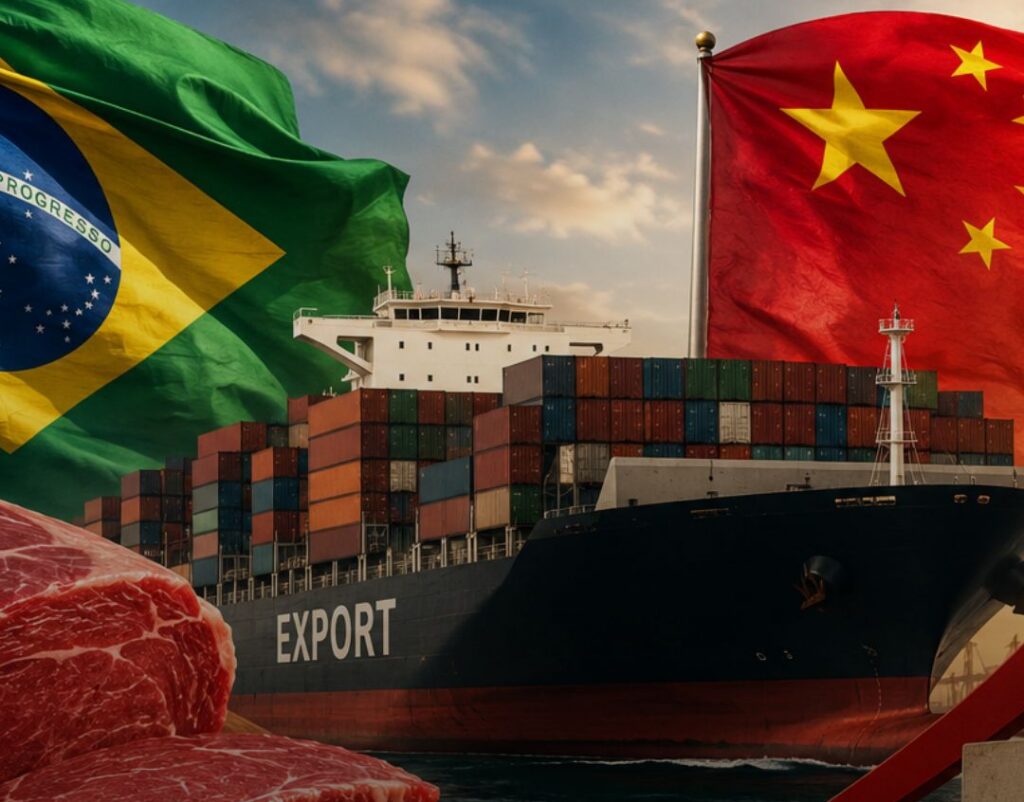
Brazil’s beef export sector is closely monitoring recent developments after the Chinese government officially confirmed that Brazil has already reached 50% of the quota established under the safeguard mechanism for beef imports in 2026.
The announcement has raised concerns among exporters, processors, and international traders, especially as Brazilian beef shipments to China continue at a highly accelerated pace. If the current export rhythm is maintained, industry analysts believe the quota could be fully exhausted as early as June or July 2026.
China’s Safeguard Mechanism and the Impact on Brazilian Beef Exports
The safeguard mechanism implemented by China is designed to regulate the volume of imported beef entering the country under preferential tariff conditions. Once the established quota is exceeded, imported products may become subject to higher tariffs or additional trade restrictions.
For Brazil — currently one of the world’s largest beef exporters — this development represents a critical moment for the industry.
China remains the main destination for Brazilian beef exports, accounting for a significant share of the country’s international protein trade. The rapid pace at which the quota is being utilized reflects not only strong Chinese demand but also the competitiveness and global relevance of Brazilian beef in international markets.
Strong Global Demand Continues to Drive Brazilian Beef
Despite concerns surrounding the quota limit, the current scenario reinforces the strength of global demand for Brazilian beef.
Brazil has consolidated its position as a strategic supplier in global protein supply chains due to several competitive advantages, including:
- Large-scale production capacity
- High-quality meat standards
- Efficient logistics and export infrastructure
- Strong sanitary control systems
- Competitive pricing in international markets
As global food demand continues to grow, especially in Asia and the Middle East, Brazilian exporters remain essential partners for countries seeking reliable and large-volume protein suppliers.
Export Sector on Alert Over Possible Quota Exhaustion
Industry stakeholders are now carefully evaluating the possible consequences of an early exhaustion of the Chinese quota.
If the quota is fully reached before the second half of 2026, exporters may face:
- Increased export costs due to additional tariffs
- Reduced competitiveness in the Chinese market
- Pressure on international pricing
- Need for market diversification strategies
- Potential shifts in global trade flows
The situation could also encourage Brazilian exporters to strengthen relationships with alternative markets across Asia, the Middle East, Africa, and Europe.
Brazil’s Strategic Role in Global Protein Supply Chains
The accelerated export pace once again highlights Brazil’s growing importance in ensuring global food security and protein supply stability.
Over the past years, Brazil has expanded its international presence through investments in traceability, sustainability, production efficiency, and trade partnerships. The country continues to play a central role in supplying beef to key international markets amid rising global consumption.
For international buyers and importers, Brazil remains a strategic and reliable sourcing partner capable of meeting large-scale demand with consistency and quality.
Outlook for the Brazilian Beef Market in 2026
As the year progresses, the market will closely monitor:
- China’s next trade policy decisions
- Potential adjustments to the safeguard mechanism
- Brazilian export volumes in the coming months
- International beef price fluctuations
- Opportunities for market diversification
While the quota situation creates uncertainty in the short term, it also reinforces the extraordinary global demand for Brazilian beef and the country’s leadership in the international protein industry.
The coming months will be decisive for exporters, traders, and global buyers navigating one of the most important trade dynamics in the global meat market.